


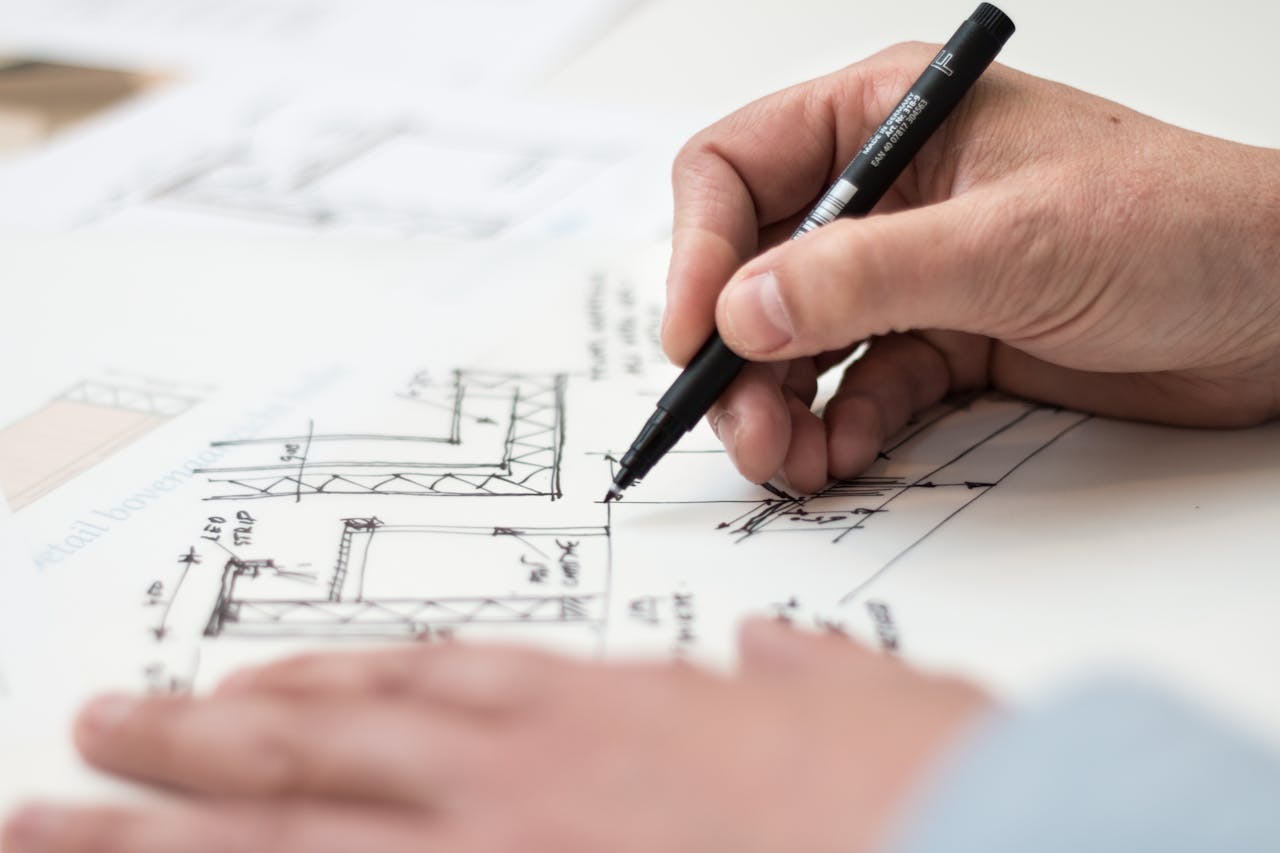

In modern construction, quality is not judged only by the materials or the final result that is visible to the eye. It is judged by the architectural precision in construction, that is, the consistency between design and implementation, the detail in execution, and the deep understanding of the space as a whole.
For a modern construction company, architectural precision is not a luxury, but a prerequisite for durable, functional and timeless buildings that retain their value over time.
What Does Architectural Accuracy Mean?
Architectural accuracy is not just about correct dimensions or faithful implementation of plans. It is a holistic approach, which includes:
- The correct interpretation of the architectural design
- The collaboration between architect, engineers and construction site
- The selection of materials based on both technical and aesthetic performance
- Attention to detail, even in areas that are not immediately visible
When construction precisely follows the logic of design, the result is buildings with coherence, clarity, and functionality.
From Design to Construction Site: The Critical Stage
One of the biggest problems in construction is the "gap" between design and implementation. Architectural precision bridges this gap.
On the construction site, every decision has consequences:
- A small deviation can affect the aesthetics of a space
- A rough solution can create operational problems
- An incorrect application of material can reduce the lifespan of the building
The presence of architectural supervision within the construction company ensures that solutions in the field do not alter the original idea, but improve it where necessary.
Detail as an Element of Quality
In architecture, detail is not decorative. It is structural. It concerns:
- The compounds of materials
- The edges and finishes
- Surface alignment
- The relationship between light and shadow
The constructional precision in these areas creates spaces that are “readable” without visual noise or a sense of sloppiness. This quality is perceived, even if the user cannot describe it technically.
Do you want your construction to be implemented with architectural precision?
Contact us to discuss how we can transform your study into a complete and quality result.
Architectural Precision and Durability
Proper construction is not just about “today.” It’s about how the building will be in 10, 20, or 30 years. Precision in application:
- Reduces maintenance needs
- Limits damage
- Ensures static and functional adequacy
A building that has been constructed with precision maintains its value and adapts more easily to future changes of use or upgrades.
The Relationship Between Architecture and Commercial Value
Architectural quality has a direct impact on the commercial value of a property. Buyers and investors recognize:
- The cleanliness of the premises
- The correct functionality
- The feeling of quality and solidity
Architectural precision in construction differentiates a property in the market and makes it more attractive, whether it is a residence or a commercial space.
The Role of the Modern Construction Company
A modern construction company doesn't just perform work. It actively participates in shaping the final result. This requires:
- Organization and proper coordination
- Technical training
- Architectural understanding of the project
When construction is treated as a continuation of the architectural design, the result acquires coherence, quality and identity.
Request an offering today for construction or renovation with an emphasis on architectural precision.
We provide comprehensive solutions with cost transparency and high quality standards.
Conclusion
Architectural precision in construction is not just a technical skill. It is an attitude and a philosophy. It is the choice to not compromise on quality, even when the details are not immediately visible.
For a construction company that invests in precision, each project is a signature of reliability, aesthetics, and long-term value.